Jonas
Meta
March 4, 2020
2
min read

The way you’re communicating with Facebook's ad platform is via your account structure. This structure is based on three levels:
Campaign → objective
Adset → targeting, schedule, budget
Ad → creative tools to build your creative
Through this structure you're able to answer 5 important questions. You are advertising using a very, very sophisticated machine learning algorithm. And while the algorithm will do all the heavy lifting, it asks the following five things of you:
“Tell me what I should be looking for (conversions, clicks, views).”
“What do you want to pay for this (your bid)?”
“Give me enough budget so I can catch a few of these things for you.”
“Give me an asset I can distribute to a specific audience”
“Let me go my own way, don’t constrain me too much, and don’t interfere while I’m working.”
What if my ads aren’t working? That’s most likely point 5, the constraining of the algorithm. How do you know if you are constraining it too much? You’ll notice two things:
A lack of conversions
Ads are expensive (because your conversion rate is low)
There are four factors causing this:
Low budget
Overlapping audiences
Small audience size
Limited placements
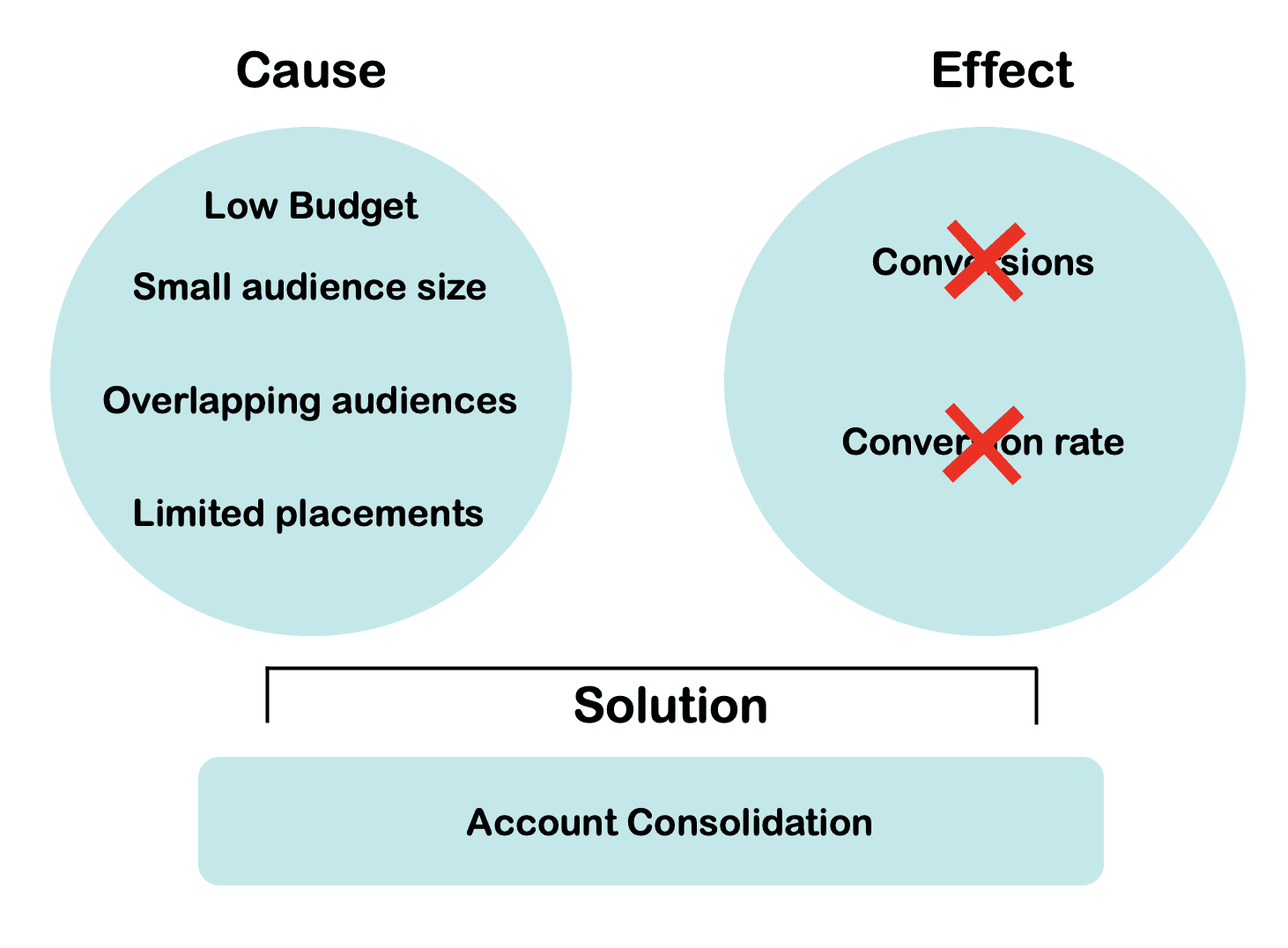
The solution? → Account consolidation.
Account consolidation means minimizing and combining all your ad sets and ads into one campaign. This lets the algorithm focus its attention and your budget on your most important goal: as many conversions as possible for the lowest possible price.
When you consolidate your account, you’re telling the algorithm: “I value all of these ad sets equally. I don’t care which one gives me conversions.”
What does a good account look like?
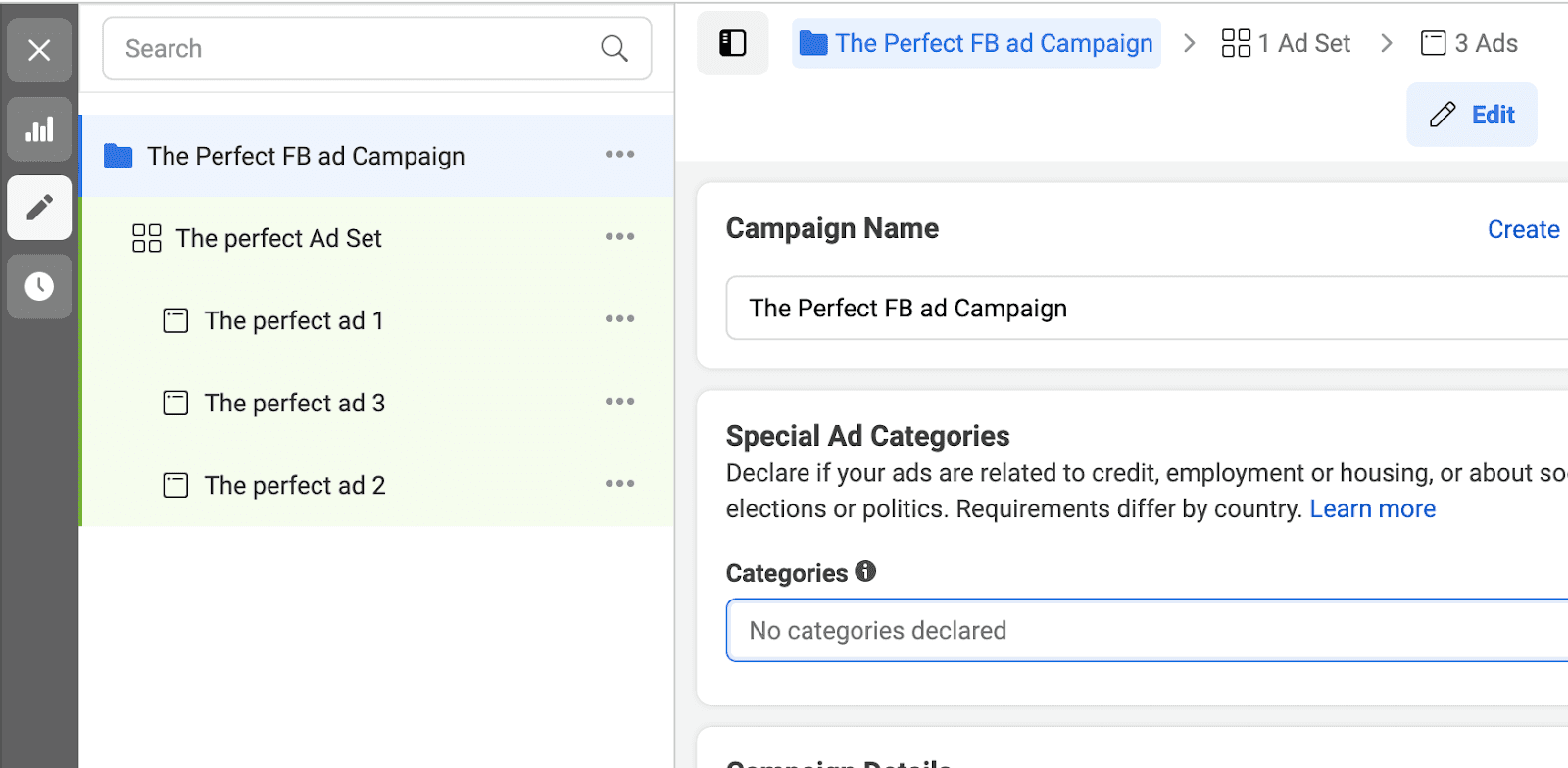
1 Campaign - 1-3 Adsets - 2-5 Ads
Written by
Jonas
Jonas is a seasoned Social Media Advertising professional with almost a decade experience working at Meta and Snap. Jonas combines operational excellence from his experience scaling Booking , Disney and Uber on the Meta platforms with leading mid market teams focussing on e-commerce and retail. Jonas believes in the power of great data in, great data out.
More articles by
Jonas